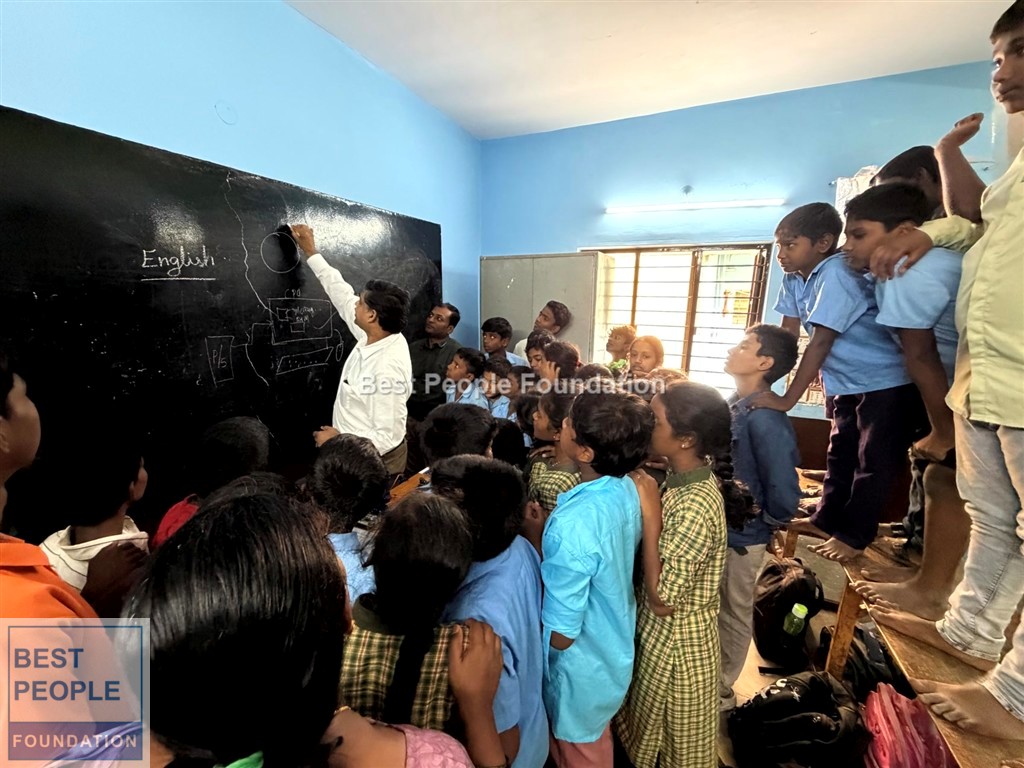
Impact at a glance
- Student participations
- 172Attendance across five workshops
- Boys
- 102Across five workshops
- Girls
- 70Across five workshops
- Workshops
- 5Weekly, 30 June – 28 July 2026
- Schools
- 2Government Kannada and Tamil Higher Primary Schools
From a signal to a decision
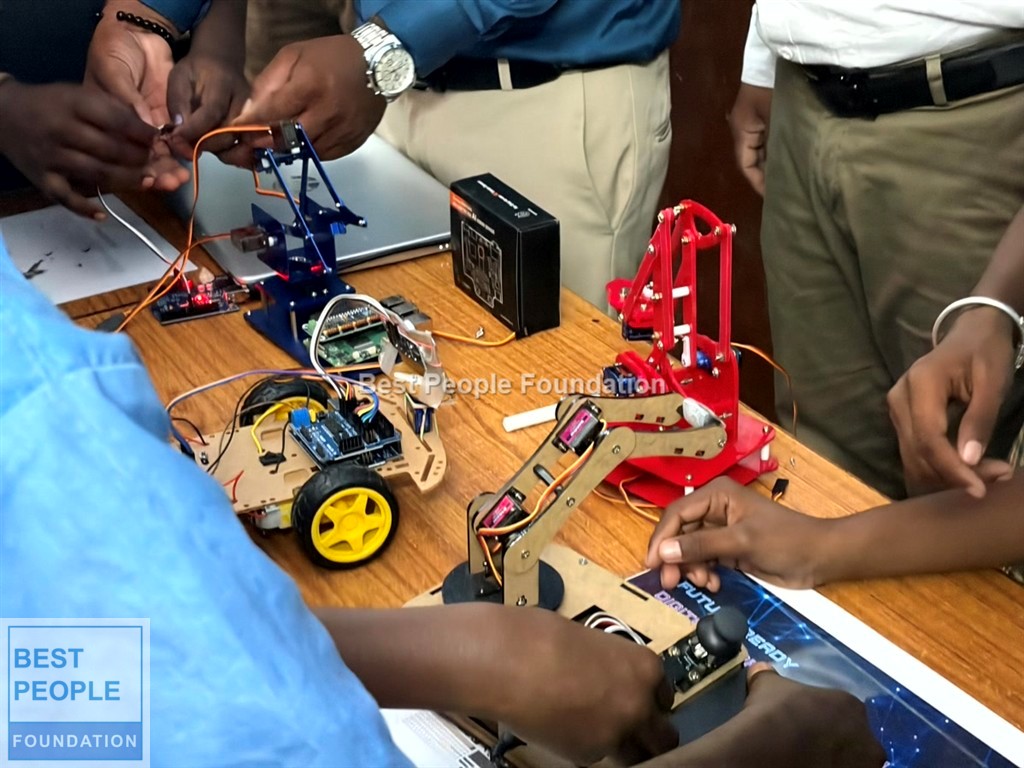
Every workshop followed one chain. A sensor or module produces a signal. The microcontroller reads it on an input pin. The program compares the reading with a threshold. An output reacts: a motor turns, an LED changes colour, or a command travels over Bluetooth.
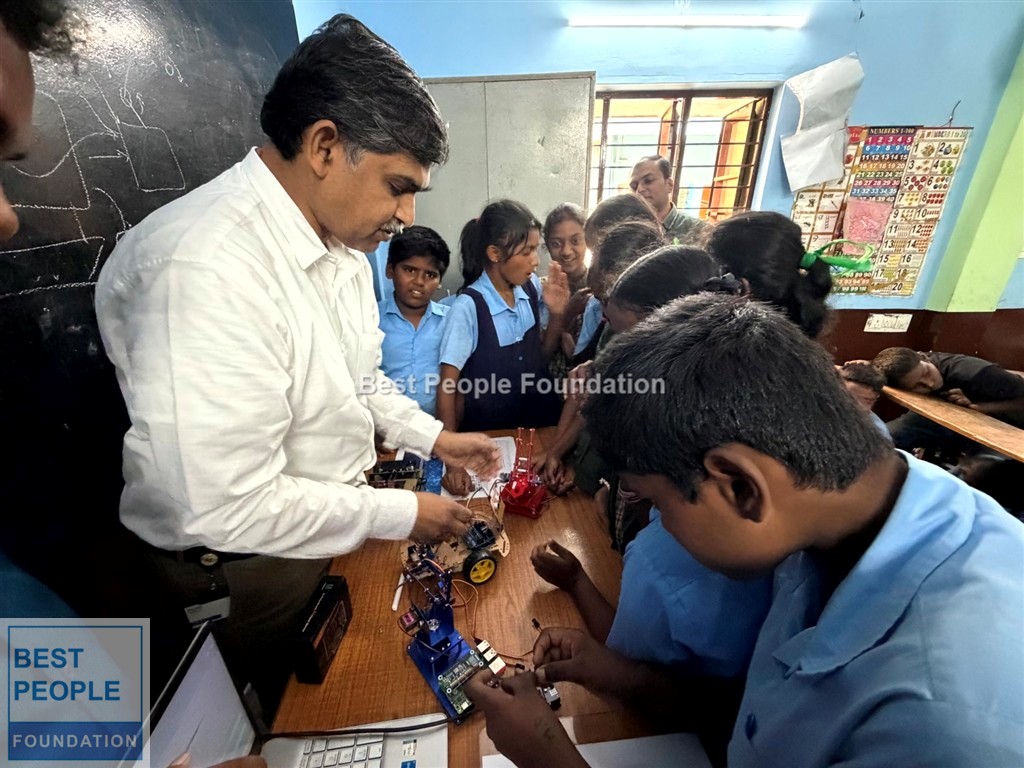
Students saw this in practice. An ultrasonic sensor sends a pulse and times its echo, and the program turns that time into a distance shown on an RGB LED. A flame sensor responds to infrared radiation from a flame. The HuskyLens AI camera recognised objects on the device itself, with no internet connection.
Four things the sensors taught
- Training is not recognition. Students separated the phase where a camera learns from the phase where it identifies.
- Power is part of the circuit. A reset fixed by an external battery and a robot's start-up current surge made supply a design question.
- Calibrate before you trust. Students tuned sensitivity to balance missed detections against false alarms.
- Every sensor has limits. Airflow, soft surfaces, angles and GPIO count all shaped what the sensors could do.
Present these as themes explored in guided sessions, not as individual mastery.
With appreciation to the Head Teachers
Best People Foundation thanks Mrs. Savithri, Head Teacher, Government Kannada Higher Primary School, and Mrs. Nalini, Head Teacher, Government Tamil Higher Primary School, for making room in the school week for five consecutive workshops and for supporting students throughout.
Practical technology, within reach
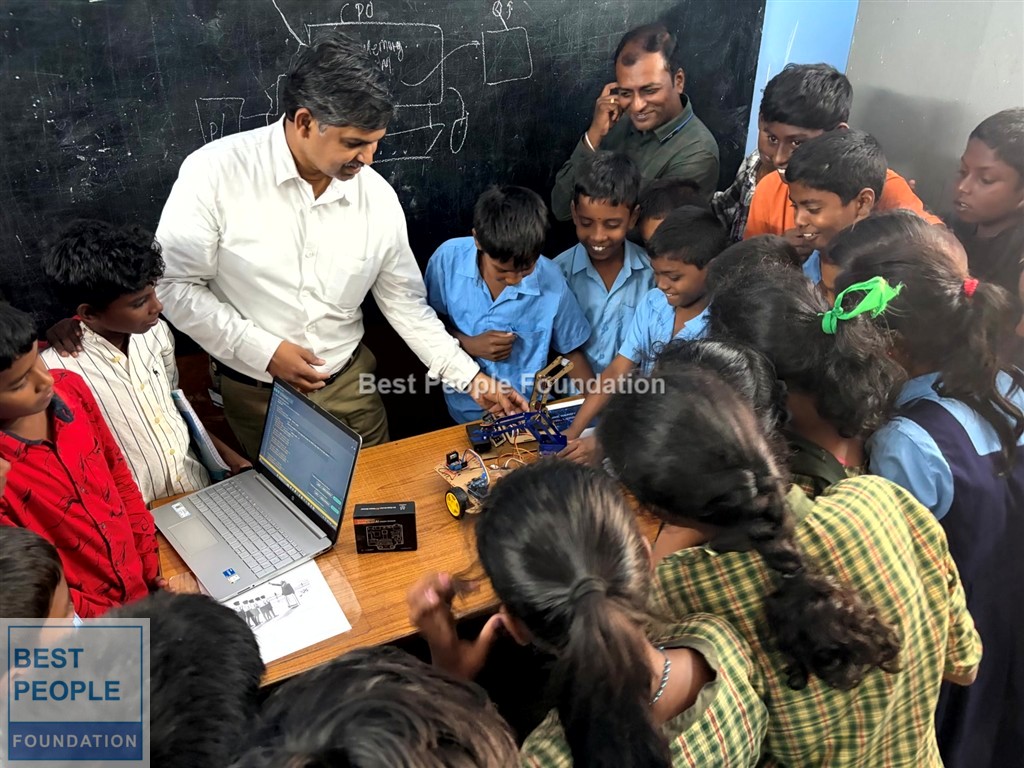
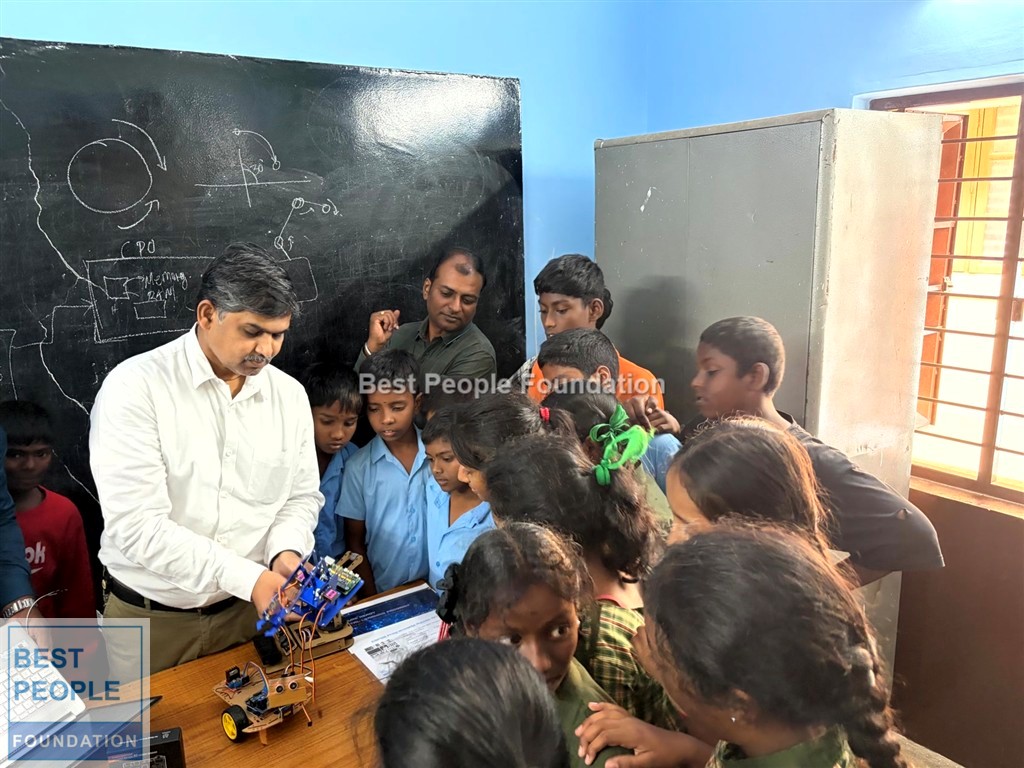
BPF's aim is for students in government schools to meet real electronics early: a wire, a pin, a reading and a result they can explain. In Maruthi Seva Nagar, that meant five hours in which a camera, a sensor and a few lines of code gave students something to test, question and improve.
Together, Let's Make Wonders.