Impact at a glance

Student participations
87Attendance across four workshops
Girls
47Across four workshops
Boys
40Across four workshops
Workshops
4Weekly, 8 – 29 July 2026
Hands-on hours
4One hour per workshop

A machine decides only what it was set up to decide

An offline voice assistant matched only exact command phrases, unlike the flexible online chatbots students already knew. A line-following robot, which depends on surface reflectivity and ambient light, lost its track the moment the line had a gap. A flame sensor's range dropped sharply when the flame was partly hidden.

Every behaviour traced back to the same chain: sensor input, a threshold in the program, and an output. Students used that chain to predict where each machine would succeed and where it would fail.

What each workshop showed

An offline voice assistant and a line-following robot

Attendance: 23 (10 boys, 13 girls)

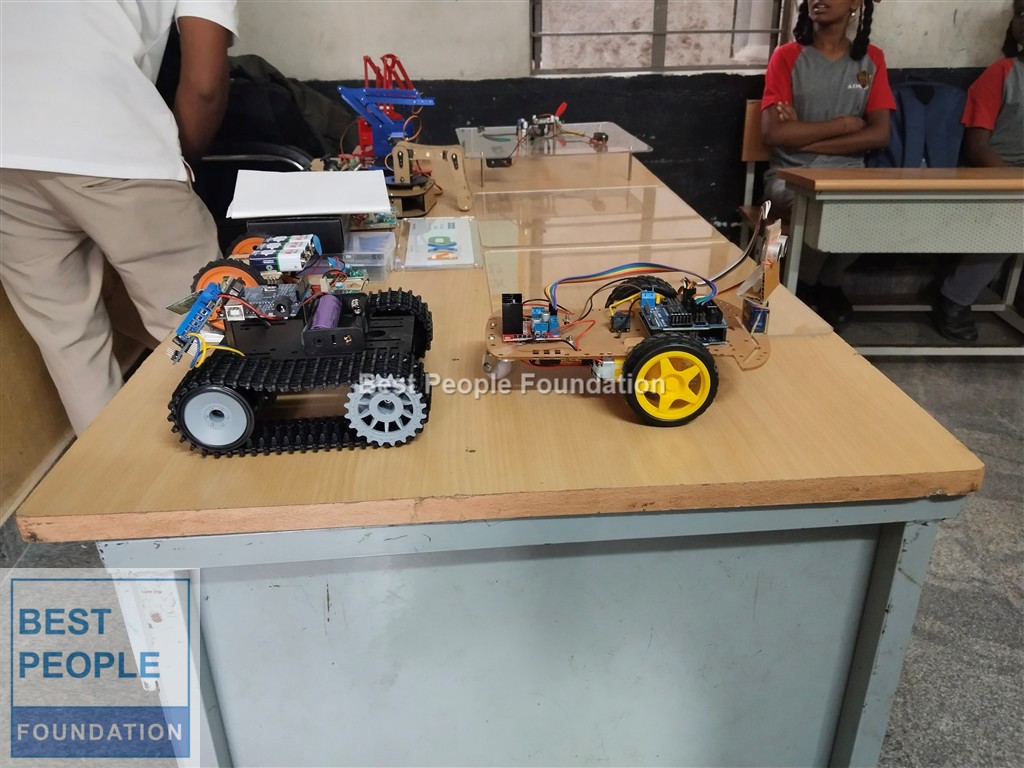
On the table: A voice assistant that recognises preset commands on the device, and a line-following robot.

Flame detection, IR beams and on-device recognition

Attendance: 20 (10 boys, 10 girls)

On the table: A flame sensor, infrared beams that trigger outputs, and an on-device object recognition demonstration.

Robot chassis and classroom environmental monitoring

Attendance: 22 (10 boys, 12 girls)

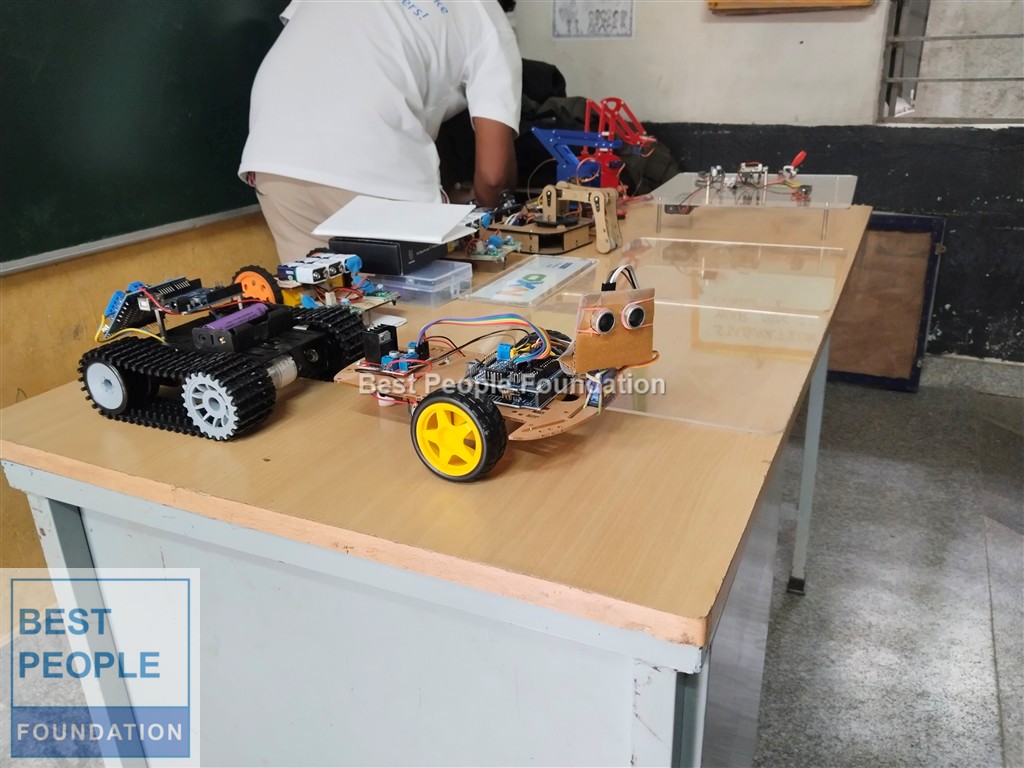
On the table: Robot platforms with different chassis weights, and environmental monitoring sensors.

Distance sensing with LED signals

Attendance: 22 (10 boys, 12 girls)

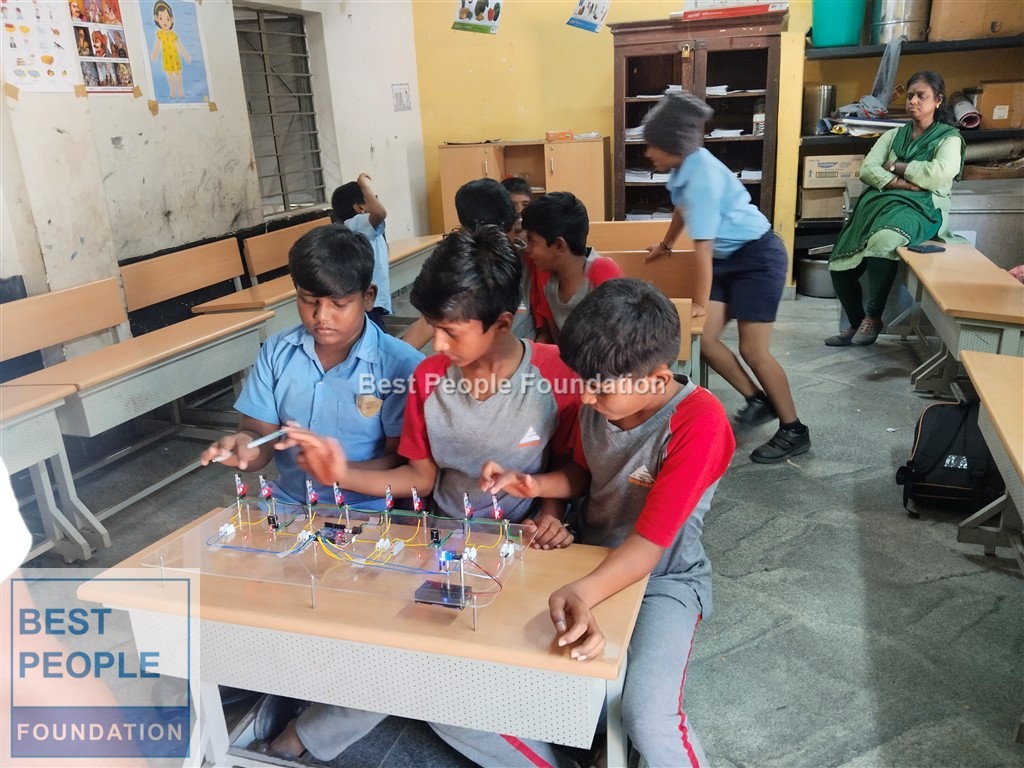
On the table: Distance sensors driving a two-colour LED.

Four lessons from the robots

  • A machine does what it was set up to do. An assistant with a fixed command list cannot improvise.
  • Light and surface change readings. Reflectivity and ambient light decided whether sensors could be trusted.
  • Build matters as much as code. A heavier chassis stayed steady where a lighter one bounced.
  • An alert needs a sensible threshold. Students weighed sensitivity against false alarms.

Present these as themes explored in guided sessions, not as individual mastery.

Students testing an offline voice assistant and a line-following robot
Voice commands and line following
Students working with a flame sensor and infrared beams
Flame sensing and IR beams
Students examining a robot with a heavy chassis next to environmental sensors
Chassis stability and monitoring
Students testing a distance sensor with a red and green LED indicator
Distance shown on a two-colour LED
Students and teachers during an electronics workshop in a government school classroom
A workshop in progress
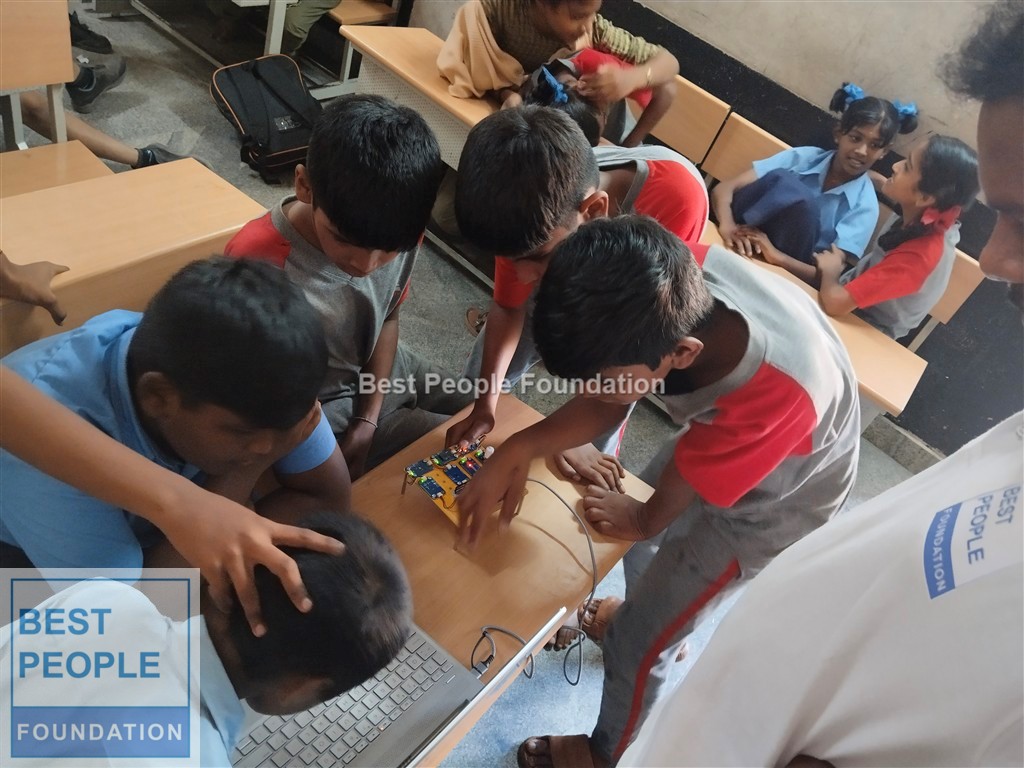
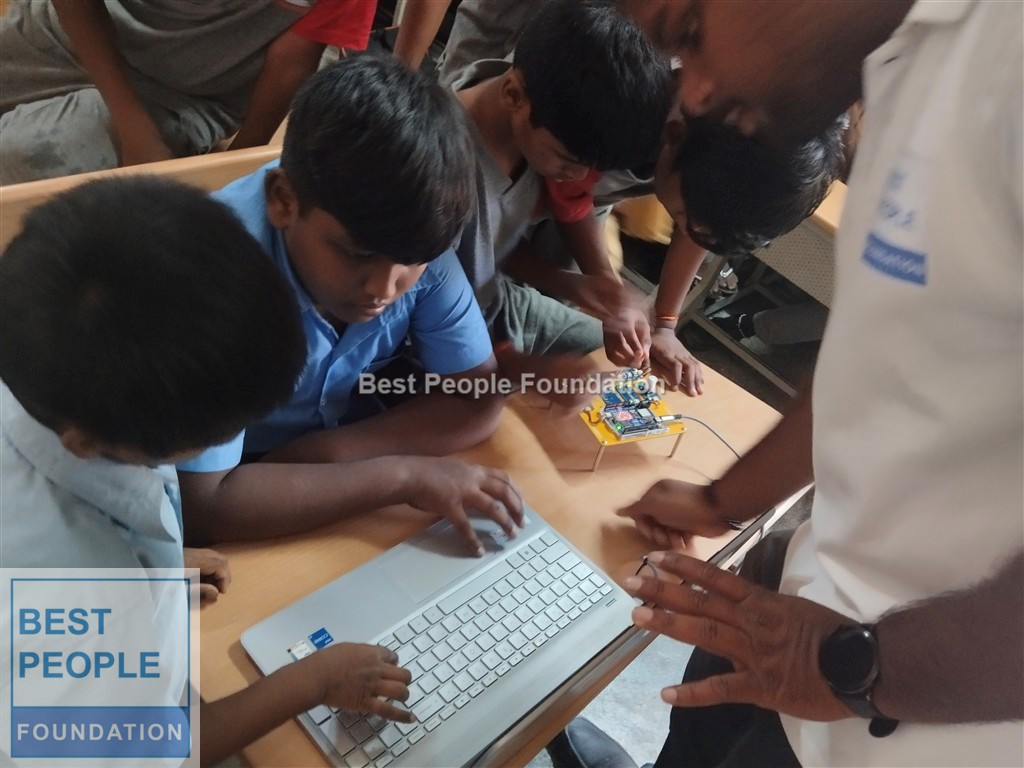
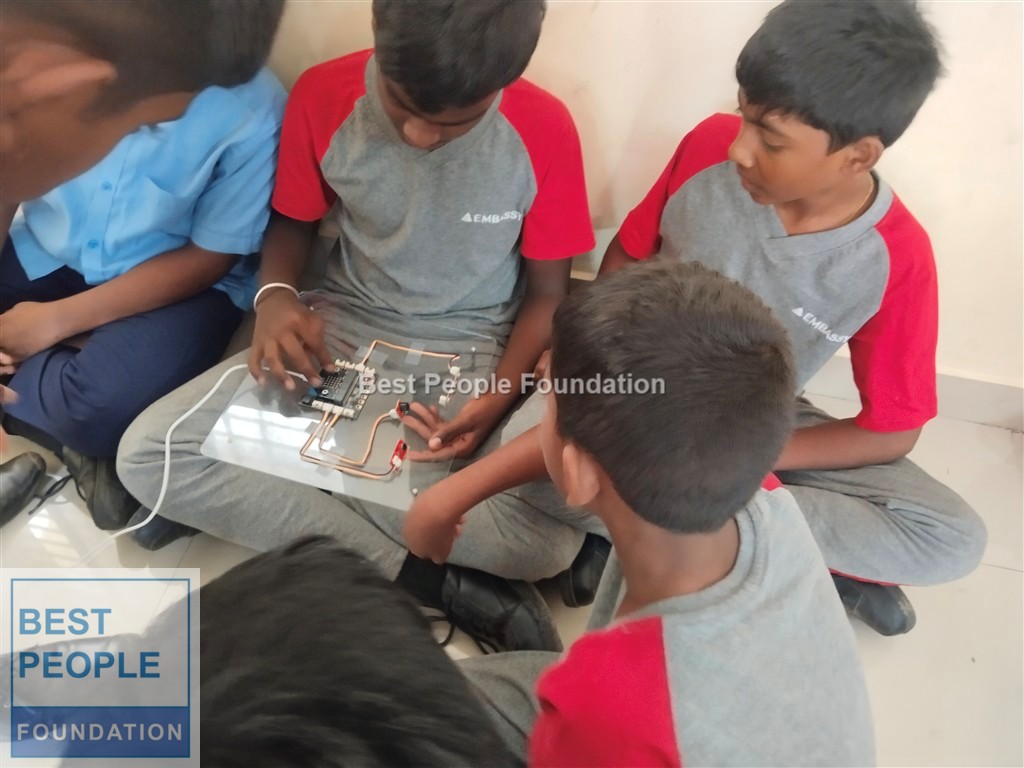
Students examining an electronics board alongside a laptop
Testing an electronics project with a laptop

With appreciation to the Head Teacher

Best People Foundation thanks Mrs. Beena, Head Teacher, Government Tamil Higher Primary School, Cox Town, for welcoming four weekly workshops into the school week and for supporting students throughout.
Practical technology, within reach

A voice assistant that understood only exact phrases showed students something chatbots hide: a machine does exactly what it was set up to do. By testing where each robot and sensor failed, students at Cox Town learned how to question a machine's decisions and improve them. BPF's aim is for students in government schools to have that experience early.

Together, Let's Make Wonders.