Impact at a glance
- Student participations
- 179Attendance across four workshops
- Girls
- 89Across four workshops
- Boys
- 90Across four workshops
- Workshops
- 4Weekly, 8 – 29 July 2026
- Hands-on hours
- 4One hour per workshop
When the circuit meets the room
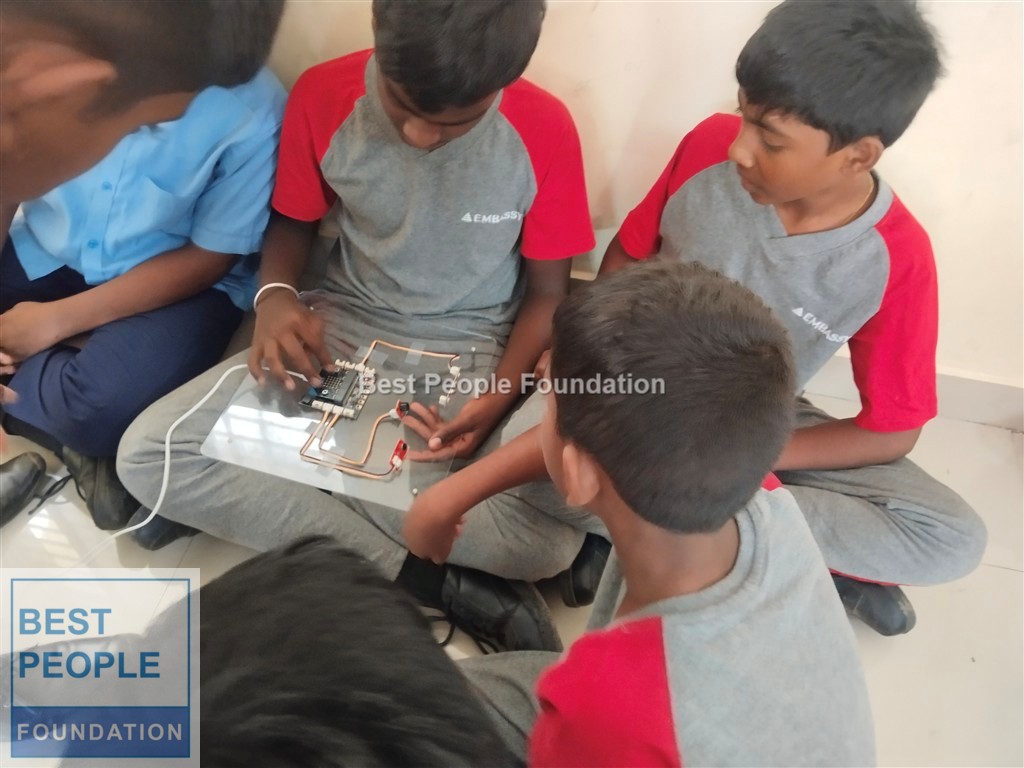
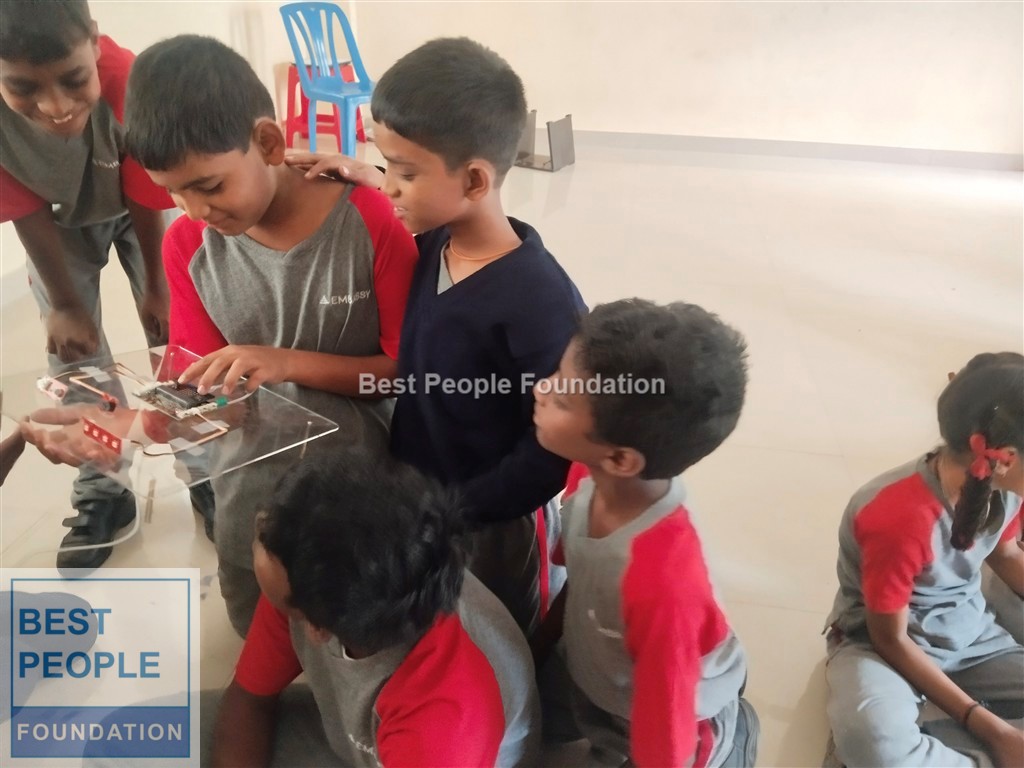
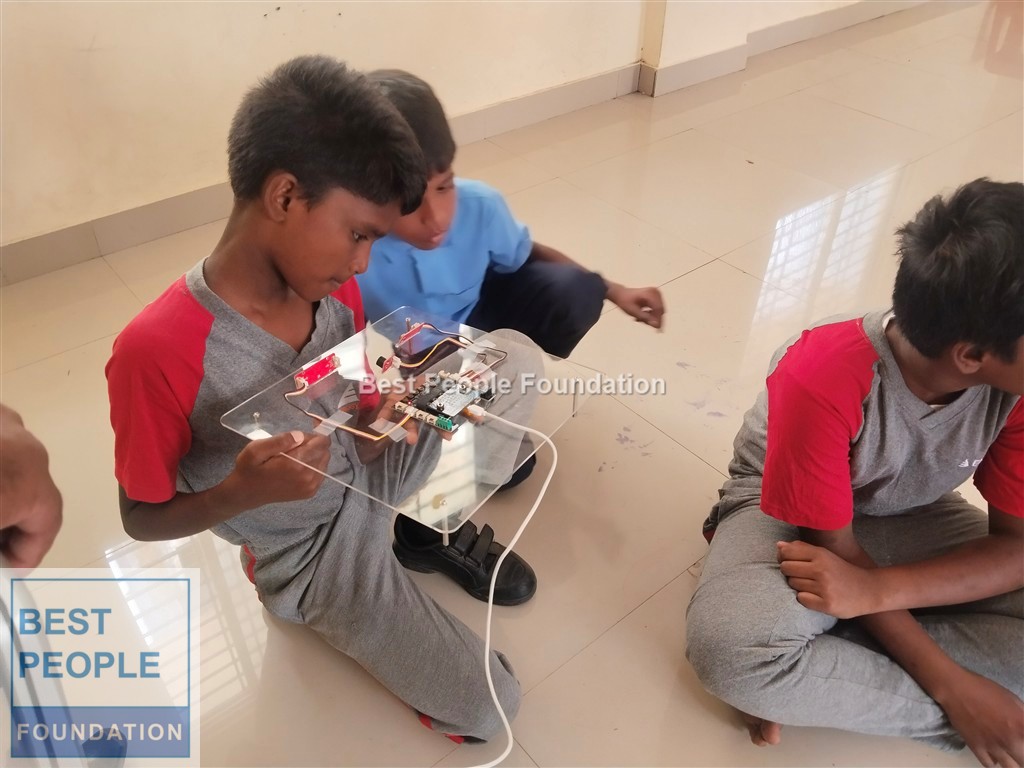
A robot's steering jittered until a delay was added to its control loop. Sensors missed narrow or angled objects sitting in their dead zones. A gas sensor needed ten minutes of pre-heating before its readings settled. An IoT board used its onboard cryptochip and SHA-256 to secure communication, and students weighed the simplicity of a micro:bit against the processing power of an ESP32.
Each fix had the same shape: read the signal, find what the hardware was really doing, and change the code or the setup until the output matched the input.
Four lessons the hardware taught
- Timing is part of the code. A small delay in the loop settled a jittering mechanism.
- Every sensor has blind spots. Dead zones, narrow targets and angled surfaces all caused missed detections.
- Hardware needs warm-up and power. A gas sensor needed ten minutes, and a battery drained faster than USB.
- Every choice is a trade-off. IR is faster but short-range; ultrasonic reaches further; a micro:bit is simpler, an ESP32 more capable.
Present these as themes explored in guided sessions, not as individual mastery.
With appreciation to the Head Teacher
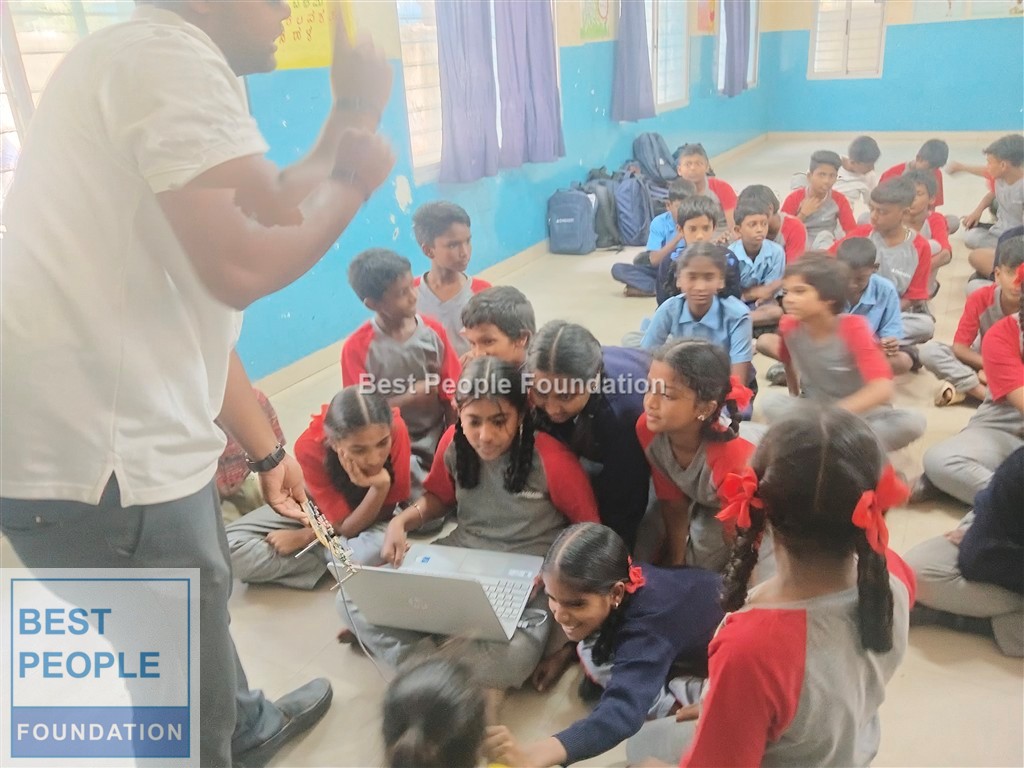
Best People Foundation thanks Mr. Siddaiah, Head Teacher, Government Kannada Higher Primary School, Cox Town, for welcoming four weekly workshops into the school week and for supporting students throughout.
Practical technology, within reach
Textbook circuits always work. Real ones jitter, go blind at odd angles and need ten minutes to warm up. At Cox Town, students met electronics as it really behaves, and learned to question a reading before trusting it. BPF's aim is for students in government schools to have that experience early.
Together, Let's Make Wonders.